
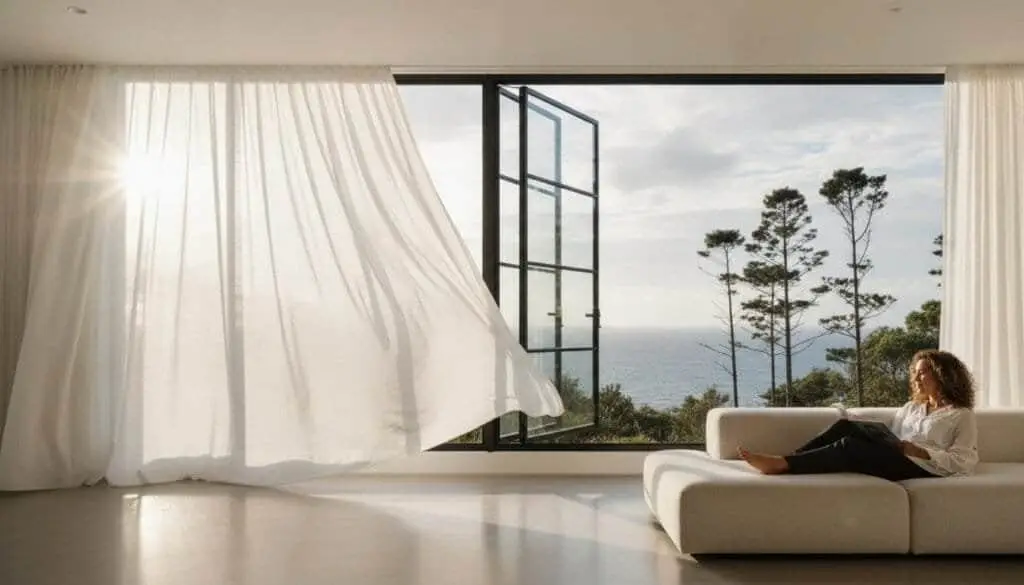
What if your windows could reach out and pull a cooling sea breeze directly into your home during a stifling Sydney January? While many homeowners settle for sliding designs that only open halfway, casement windows act as functional “wind-catchers” by angling their sashes to redirect outside air indoors. It’s a simple mechanical advantage that transforms your living environment.
We understand that living in Sydney brings specific challenges, from the corrosive salt air of coastal suburbs to the constant hum of road noise. You likely want a home that feels open and airy but remains secure and thermally efficient. This guide explores how modern aluminium casement windows meet the 7-star NatHERS requirements of the National Construction Code while providing a slimline aesthetic that adds genuine property value.
We’ll compare these high-performance systems against other popular window styles and explain why custom-engineered aluminium is the superior choice for durability and ease of operation in our local climate. This overview provides the technical clarity you need to choose a window system that balances precision with architectural style.
Key Takeaways
- Learn how the side-hinged design of casement windows acts as a “wind-catcher” to maximise natural airflow during Sydney’s humid summers.
- Compare the functional differences between casement, awning, and sliding windows to determine which style best suits your specific room layout.
- Understand the technical advantages of compression seals and multi-point locking systems for superior energy efficiency and enhanced home security.
- Explore customisation options including modern powder-coat finishes and Low-E glass to protect your interiors from harsh UV rays and coastal corrosion.
- Discover why professional on-site measurement and custom fabrication are essential for achieving a perfect weather seal in established Sydney properties.
What are Casement Windows? A Classic Reimagined for Sydney
A casement window is a side-hinged unit that swings outward, much like a standard door. These units operate via a manual crank or a friction stay, which allows the sash to be held firmly in place at various angles. If you are looking for a technical definition, What are Casement Windows? provides an excellent overview of their structural design and historical use. In Sydney, casement windows are currently seeing a significant resurgence in high-end renovations. This popularity stems from their ability to provide a clean, minimalist look that complements both heritage Federation cottages and contemporary coastal builds.
The “Wind-Catcher” Effect for Sydney Summers
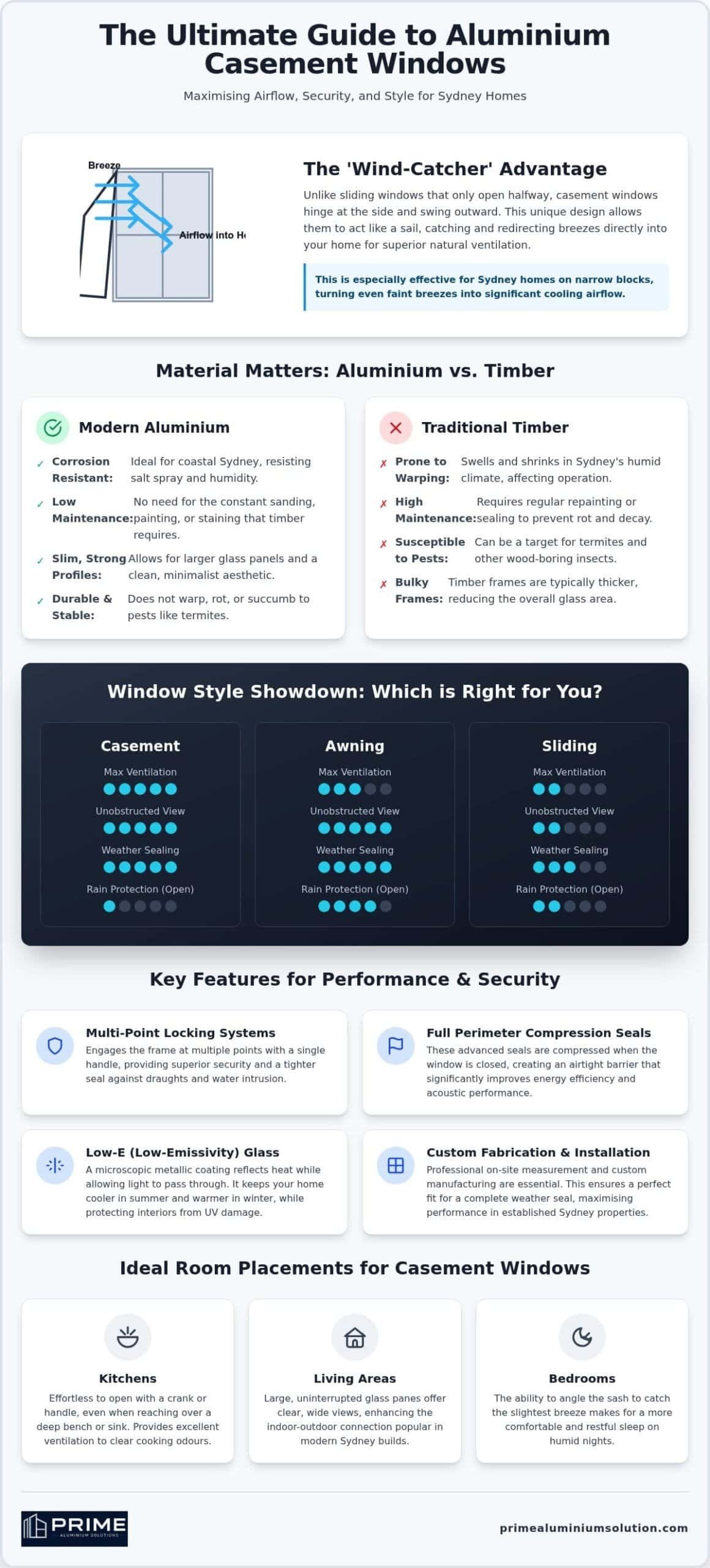
The primary functional advantage of casement windows is their ability to act as a sail. When the sash is opened at an angle, it catches breezes moving parallel to the building and funnels them directly into your home. This mechanical advantage is vital for homeowners on narrow blocks in suburbs like Surry Hills or Paddington, where houses are often built close to the boundary. While sliding windows only offer a 50 per cent opening, a casement design allows the entire aperture to be used for ventilation. This results in superior airflow that can significantly lower the temperature of a room without relying on constant air conditioning.
Aluminium vs Timber: The Durability Debate
While traditional timber windows have a classic appeal, they’re often ill-suited for the demanding Sydney environment. Timber is prone to warping in high humidity, rotting during heavy rain periods, and remains a constant target for termites. Aluminium systems provide a reliable, “set and forget” solution for local property owners. The material is naturally resistant to corrosion and doesn’t require the perpetual sanding, staining, or repainting that timber demands.
Modern fabrication allows for ultra-slim aluminium profiles that achieve a high-end, architectural aesthetic. These frames mimic the elegant lines of heritage timber windows while offering vastly superior structural integrity and weather sealing. You get the visual warmth of a classic home with the performance of a modern, precision-engineered system. This durability ensures your windows remain easy to operate and visually striking for decades, even when exposed to harsh coastal salt spray or the intense afternoon sun.
Casement vs Awning and Sliding: Which Style Suits Your Layout?
Choosing the right window configuration depends on your home’s orientation and how you use each room. While casement windows offer unparalleled ventilation, they require external clearance to swing open. If your window faces a narrow walkway or a tight side-passage, a sliding window might be the more practical choice to avoid obstructing the path. However, for most Sydney layouts, the performance benefits of a casement often outweigh the footprint requirements.
Comparing casements to awning windows reveals a specific trade-off in weather protection. Awning windows hinge at the top, creating a small “hood” that allows for ventilation even during light rain. In contrast, casement sashes open vertically like a door. This makes them far more effective at catching cross-breezes but less suitable for use during a sudden summer downpour. Many homeowners choose to combine these styles, using awnings in bathrooms for privacy and rain protection, while installing casements in primary living zones to maximise airflow.
The Best Rooms for Casement Windows
Kitchens are an ideal location for this style. Reaching over a deep bench to lift a heavy double-hung window is physically demanding. A casement uses a simple crank handle or friction stay, making it the ergonomic choice for installation behind kitchen sinks. In living areas, the large glass spans provide wide, clear views that help blur the line between your lounge and the garden, supporting the indoor-outdoor flow popular in modern Sydney builds.
Bedrooms also benefit significantly from this design. On humid nights, the ability to angle the sash to catch a faint breeze can be the difference between a restful sleep and a stifling room. Because they open fully, they provide the maximum possible ventilation for the size of the opening.
Comparison Framework: Form, Function, and Cost
One overlooked benefit is the ease of maintenance. Many designs allow you to reach both sides of the glass from inside the building, which is a major advantage for upper-storey rooms where external ladder access is difficult. From an aesthetic perspective, the single large pane creates a “picture window” effect when closed, offering a cleaner look than the divided panes of sliding or double-hung alternatives.
These units are generally viewed as a premium investment. While the initial outlay for bespoke aluminium windows may be higher than basic sliders, the increase in property value and energy performance provides a significant long-term return. The structural integrity of the aluminium frames ensures the hardware operates smoothly for years without the sagging often seen in cheaper materials.
Maximising Performance: Ventilation, Security, and Energy Efficiency
The mechanical design of casement windows provides a performance advantage that sliding alternatives cannot match. While sliding windows rely on weather stripping that brushes against the frame, a casement sash uses a compression seal. When you close the window, the sash presses firmly against the entire perimeter of the frame, creating an airtight barrier. This physical seal is the primary reason these windows are more effective at blocking out Sydney’s humidity and the persistent hum of suburban traffic.
Energy Efficiency and Double Glazing
Research indicates that up to 40 per cent of a home’s heating or cooling energy can be lost through inefficient windows. In 2026, meeting the 7-star NatHERS requirement is essential for new builds and significant renovations across Australia. Our aluminium systems are designed to accommodate high-performance double glazing, which helps maintain a stable internal temperature regardless of the external conditions. For a deeper look at how specific glass types impact your comfort, see our Energy Efficient Glazing Guide for Sydney Homes. By combining a precision-engineered compression seal with Low-E double glazing, you can significantly reduce your reliance on mechanical cooling during the peak of summer.
Advanced Security for Peace of Mind
Security is a primary concern for many Sydney residents, particularly those in street-facing properties. Because the sash is tucked into the frame when closed, casement windows are notoriously difficult to jemmy open from the outside. We enhance this natural structural advantage by using multi-point locking systems. These mechanisms secure the window at several distinct points along the frame with a single turn of the handle, providing a level of resistance that standard latch systems cannot provide.
In coastal areas where wind loads are higher, we utilise heavy-duty friction stays. These components ensure the sash remains stable in its open position, preventing it from slamming shut during a sudden southerly buster. Every installation we perform adheres strictly to the AS1288 glazing standards for safety and structural integrity. This ensures the glass can withstand local pressure requirements while providing a secure environment for your family. Additionally, our designs allow for the seamless integration of high-quality flyscreens, ensuring you can enjoy maximum ventilation without compromising on security or comfort.
Customising Your Aluminium Casement Windows: Colours and Glass
Customisation is about more than just visual appeal. It’s about resilience. For homes within 5km of the Sydney coastline, salt-air corrosion is a genuine threat to the longevity of building materials. We recommend marine-grade powder-coat finishes to ensure your casement windows maintain their structural integrity and finish against corrosive sea spray. While standard finishes may flake or pit over time when exposed to the ocean, a high-performance coating provides a durable barrier that preserves the premium look of your property for years.
Matching Sydney Architectural Styles
Sydney’s diverse architecture requires a tailored approach to frame selection. For a Heritage Terrace in suburbs like Newtown or Glebe, dark grey or black frames, such as the classic Monument shade, provide a striking industrial contrast against traditional red brickwork. In Coastal Contemporary homes on the Northern Beaches, lighter tones like Surfmist or warm sandy beiges are preferred to reflect the local light and seaside atmosphere. For large-scale Sydney apartments, we utilise thicker commercial-grade profiles. These frames offer the necessary strength for high-wind loads at elevation while maintaining the slim, modern silhouette that homeowners expect.
Glass Performance for the Australian Climate
The choice of glass is critical for managing the intense Australian sun. Low-E (low-emissivity) glass is a standard recommendation for modern Sydney renovations. It features a microscopic coating that reflects radiant heat back to its source, which keeps your home cooler in summer and warmer in winter. This choice directly supports your home’s energy rating and reduces long-term cooling costs. If you live in high-density areas of the Inner West, frosted or tinted privacy glass allows you to maintain natural light without sacrificing your personal space to neighbours.
Safety and security are equally important. Toughened glass is heat-treated for strength and breaks into small, blunt pieces if impacted. Laminated glass features a specialized interlayer that holds the shards together, making it much harder for an intruder to gain entry. We also offer a range of hardware finishes for handles and winders. This allows you to match your window controls to your interior door hardware for a cohesive, professional finish throughout the home. If you are ready to select the right finish for your project, get a free on-site measurement and quote from our Sydney specialists.
Professional Installation: Why Custom Fabrication is Non-Negotiable
Off-the-shelf windows might seem convenient, but they rarely suit the reality of Sydney’s housing stock. Many homes in the Inner West or Eastern Suburbs have settled over decades, meaning window openings aren’t perfectly square. Installing a generic, mass-produced unit into a settled opening often leads to gaps that compromise the entire system. For casement windows, these gaps are particularly problematic. If a frame doesn’t fit perfectly, the compression seal fails to engage correctly, which leads to air leakage and audible whistling during high winds.
The On-Site Measurement: Getting it Right the First Time
Precision starts long before the first piece of aluminium is cut. Our process involves millimetre-perfect on-site measurements to ensure the new frames account for any irregularities in your home’s structure. This level of detail is essential for the smooth operation of casement windows and their side-hinged sashes. We also inspect the structural integrity of the existing opening to ensure it can support the weight of modern double glazing. You can learn more about our specific methodology in our guide to Bespoke Aluminium Window Installation in Sydney. Getting the foundation right ensures the hardware remains aligned and the window operates effortlessly for its entire lifespan.
Choosing a Local Sydney Specialist
Working with a local specialist provides several logistical and regulatory advantages. A local supply chain means faster lead times and significantly reduces the risk of transport damage that often occurs with interstate or overseas shipping. We also understand the nuances of local council requirements. Whether your project falls under a Complying Development Certificate (CDC) or requires a full Development Application (DA), we can provide the technical documentation needed for compliance.
Prime Aluminium Solution focuses on delivering a product that performs as well as it looks. By choosing a local manufacturer, you gain the security of a Sydney-based warranty and direct after-sales support. If you ever need an adjustment or have a technical query, our team is nearby and ready to assist. This proximity ensures that your investment is protected by experts who take pride in their workmanship and understand the specific environmental demands of the Sydney metropolitan area.
Upgrade Your Sydney Home with Precision-Engineered Windows
Choosing the right window system is a long-term investment in your property’s value and daily comfort. We’ve explored how casement windows provide the ultimate ventilation solution for our local climate, using their unique side-hinged design to catch cooling breezes. By opting for high-performance aluminium over traditional timber, you ensure your home remains protected against coastal corrosion while benefiting from superior energy efficiency and multi-point security.
Achieving these results requires more than just quality materials; it demands precision at every stage. Our products are custom-fabricated right here in Sydney to meet the specific requirements of your floor plan and local council regulations. From the initial measurement to the final expert installation, our local team ensures a perfect weather seal that eliminates leaks and noise pollution. This methodical approach ensures your new windows perform reliably for decades.
If you’re ready to enhance your home’s airflow and aesthetic with a durable, modern solution, Request a Free On-Site Measure and Quote in Sydney today. We look forward to helping you create a living space that performs as beautifully as it looks.
Frequently Asked Questions
Are casement windows more expensive than sliding windows in Sydney?
Casement windows generally represent a higher initial investment than sliding windows due to the complexity of their hardware and the precision of their construction. While sliding windows use simpler tracks, casements require high-quality hinges, stays, and multi-point locking systems. However, the superior air sealing and ventilation performance often lead to long-term energy savings that offset the upfront cost difference in Sydney’s climate.
Can I install flyscreens on aluminium casement windows?
Yes, flyscreens are easily integrated into aluminium casement windows. Because the sash opens outwards, the screen is typically installed on the internal side of the window frame. This allows you to operate the winder or friction stay without removing the mesh. We offer several mesh types, including micro-mesh for smaller insects and heavy-duty options for homes in bushfire-prone areas that require specific BAL ratings.
Do casement windows open inwards or outwards?
Standard casement windows in Australia almost exclusively open outwards. This design ensures that the sash doesn’t interfere with internal curtains, blinds, or furniture. Opening outwards also allows the window to act as a “wind-catcher,” angling the sash to funnel external breezes into the room. It’s important to ensure there is enough external clearance for the sash to swing fully without obstructing walkways.
Are casement windows secure against intruders?
Casement windows are among the most secure window styles available for Sydney homes. When closed, the sash is fully encased by the frame, making it extremely difficult for intruders to gain leverage with a jemmy. Most modern versions feature multi-point locking systems that secure the window at several locations along the frame with a single handle turn, providing a much higher level of resistance than a standard sliding latch.
How do I clean casement windows if they are on the second floor?
Cleaning casement windows on upper floors is safer and easier than with many other styles. Many modern friction stays are designed to create a gap between the sash and the frame when opened at a 90-degree angle. This allows you to reach through the opening and clean the exterior glass surface from inside the room. This feature eliminates the need for ladders or professional high-reach window cleaning services for most standard residential layouts.
What is the maximum size for a custom aluminium casement window?
The maximum size for a custom aluminium casement window depends on the wind load requirements of your specific Sydney suburb and the weight of the glazing used. While standard sashes often reach up to 1500mm in height and 900mm in width, we can engineer larger configurations by using heavy-duty hardware and reinforced aluminium profiles. We determine the exact safe dimensions during our on-site measurement to ensure long-term structural integrity.
Do casement windows rattle in high winds near the coast?
High-quality casement windows don’t rattle in high winds because they use a compression seal. Unlike sliding windows that sit loosely in a track, a casement sash is pulled tightly against a continuous rubber seal when locked. This creates a firm, airtight fit that prevents movement. In coastal areas, we use heavy-duty friction stays that hold the sash securely in place even when the window is open during a breeze.
Is double glazing necessary for casement windows in Sydney?
While not strictly mandatory for every renovation, double glazing is highly recommended to meet the 2026 7-star NatHERS energy requirements. In Sydney, double-glazed units significantly reduce heat gain during summer and prevent warmth from escaping in winter. When paired with the airtight compression seal of a casement frame, double glazing provides the best possible thermal and acoustic performance for busy suburban or coastal environments.