
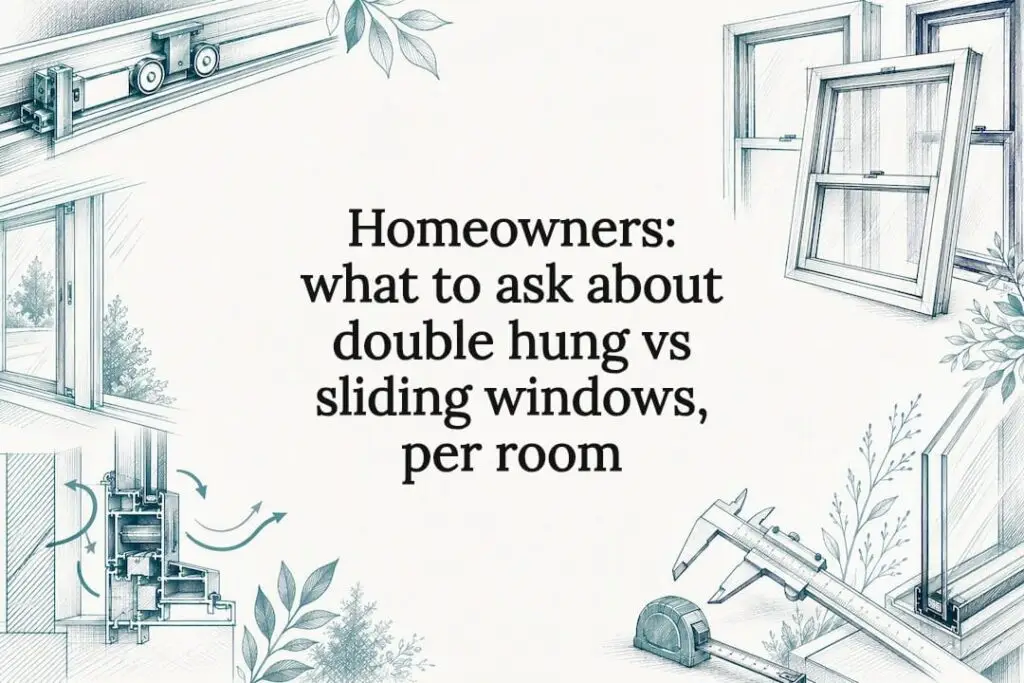
Double hung and sliding windows suit different opening shapes and room requirements. Sliding windows are practical for wide openings, while double hung windows suit taller openings and allow the upper or lower sash to move. Before choosing, compare ventilation, cleaning access, screens, locks, glass, tested performance and any upper-floor window safety requirements.
- Energy efficiency depends more on glass quality and sealing than sash type, so premium IGU specifications are essential regardless of choice.
- Double hung windows excel at ventilation control and upper-floor cleaning, but tend to be more expensive and require more hardware maintenance over time.
- Sliding windows are ideal for large, wide openings and unobstructed views, while also offering easier routine upkeep with fewer moving parts.
- Proper installation, including square framing and effective drainage, is crucial for longevity and performance of either window style.
- When selecting, prioritize room-specific needs like ventilation, view, or space constraints, and verify warranty coverage and seal durability before purchase.
Table of Contents
- Double hung vs sliding windows: what actually sets them apart
- What are sliding windows and how do they operate?
- What are double hung windows and how do they operate?
- Pros and cons: the trade-offs that matter to homeowners
- Ventilation and airflow: how each type performs in real rooms
- Cost, installation, and maintenance expectations
- Energy efficiency and weather sealing: what to ask for
- Where each style works best: room by room
- Installer checks and questions to ask before you sign off
- A simple decision framework you can use now
- Why choose Prime Aluminium Solution for your window upgrade
- Sources
- FAQ
Double hung vs sliding windows: what actually sets them apart
Before comparing trade-offs, it helps to know what each window physically does. A sliding window runs on a horizontal track, while a double hung window moves on two vertical sashes stacked one above the other. That mechanical difference is what drives almost every practical distinction between them, from how much air moves through a room to how much a service call costs you in ten years.
Most homeowners searching for “double hung or sliding windows” already know they need new glass. What they actually want is a straight answer on which one suits their bedroom, kitchen, or upper storey. That’s the ground this article covers, room by room and cost line by cost line.
What are sliding windows and how do they operate?
A sliding window opens by moving one or more sashes horizontally along a track, usually with rollers set into an aluminium or uPVC frame. The design suits wide openings and delivers large, uninterrupted views, which is why you see them so often across living rooms and kitchens.
You’ll come across a few variants on the market:
- Single sliders, where one sash moves and the other stays fixed.
- Double or triple sliders, offering two or three moving panels for wider spans.
- Lift-and-slide systems, heavier-duty units that lift slightly off the track before sliding, common on large openings or door-height glazing.
Maintenance is fairly low-effort but not zero. Tracks collect dust, grit, and insect debris, and rollers can wear or stick if left unattended. A quick vacuum of the track and a check of the roller wheels once or twice a year keeps the action smooth. Skip that, and you’ll eventually be wrestling a sash that used to glide.
What are double hung windows and how do they operate?
A double hung window has two sashes that both slide vertically within the frame, held in place by balance hardware such as springs or weights. Because both the top and bottom sash can move independently, you can open the window from the bottom for a breeze at seating height, or crack the top to vent hot air near the ceiling.
Most modern double hung units also tilt inward, which is one of their standout practical features:
- Tilt-in sashes let you clean the outside glass from inside the house, a genuine advantage on second-storey bedrooms where a ladder is otherwise the only option.
- Dual opening points give you more control over airflow direction than a single-plane slider.
- Balance hardware (springs, weights, or friction stays) holds each sash at any height without it dropping.
The trade-off is more moving parts. Sash balances and weatherstripping benefit from an annual check, and older double hung units can develop rattles or drafts if that hardware wears out. Tilt-in double hung sashes remain one of the strongest reasons renovators choose them for upper floors despite the extra hardware.
Pros and cons: the trade-offs that matter to homeowners
Here’s where the decision actually gets made. Ventilation, view, cost, cleaning, and security pull in different directions depending on the window type, and no single feature wins across the board.
- Ventilation. Double hung wins on airflow control because opening both sashes creates a convection effect, pulling warm air out the top while cool air enters low. Sliders only open on one horizontal plane, so airflow depends more on cross-breezes from other openings in the room.
- View and daylight. Sliders take this one comfortably. A wide slider with a single large pane gives you an uninterrupted view that a double hung’s stacked sashes and central meeting rail can’t match. If you’re after a classic, divided-light look on a period façade, double hung still reads as the more traditional choice.
- Cost. Double hung windows are typically the pricier option because of the balance hardware, dual sash tracks, and tilt mechanisms involved. Sliders have a simpler mechanical footprint, which usually shows up as a lower unit price, especially at larger widths.
- Maintenance. Sliding windows tend to run lower maintenance thanks to fewer moving parts, though the track needs regular cleaning to stop debris jamming the rollers. Double hung has more hardware that can eventually need adjustment or replacement, balanced against the safety and convenience of tilt-in cleaning.
- Security and sealing. Both styles can be built to a high security standard with multi-point locks and toughened glass, so the difference comes down to hardware quality and installation rather than the sash type itself.
Pro Tip: Don’t choose a window style off a showroom brochure alone. Stand in the actual room, note which wall gets the afternoon sun, and check whether you need ladder-free cleaning access before locking in a decision.
Ventilation and airflow: how each type performs in real rooms
Double hung windows create a natural stack effect: crack the top sash and the bottom sash together, and warm air escapes high while fresh air draws in low. That’s genuinely useful in a bedroom or study where you want steady airflow without a howling gust across the room.
Sliders move air differently. Because the opening is horizontal, they’re most effective when paired with another opening on an opposite or adjacent wall, letting a breeze pass straight through. In a room with only one external wall, a slider on its own won’t move air as efficiently as a double hung set to its dual-sash configuration.
A few practical notes:
- Double hung suits rooms with a single external window where you still want cross-ventilation-like airflow.
- Sliders shine in open-plan living areas where multiple windows or doors already create a through-breeze.
- In coastal or rain-prone spots, a double hung’s top-sash opening lets you ventilate without leaving a wide horizontal gap exposed to driving rain.
- Glass and seal quality generally do more for comfort than sash type. A well-glazed slider can match a double hung’s thermal performance if the IGU and seals are done properly.
Cost, installation, and maintenance expectations
Price is driven by four things: frame material, the insulated glass unit (IGU) specification, hardware quality, and how complex the installation is. A wide slider in a straightforward opening is usually the cheapest configuration to supply and fit. A double hung retrofit into an older frame, especially one needing new balance hardware, tends to sit at the higher end.
Double hung windows generally cost more up front because of the extra hardware: springs or weights for each sash, tilt-latch mechanisms, and more complex weatherstripping. Sliders save money mainly through simpler mechanics, though large lift-and-slide units can close that gap quickly once you’re spanning several metres.
Installation quality matters more than either style’s sticker price. Get the frame out of square, skimp on the seal, or miss proper drainage at the sill, and you’ll be troubleshooting condensation or draughts within a year regardless of which sash type you chose.
A short annual maintenance routine covers most of what either style needs:
- Vacuum tracks and wipe rollers on sliders; check for stiff or sticking action.
- Inspect sash balances and weatherstripping on double hung units for wear.
- Clear weep holes so water drains away from the sill instead of pooling.
- Check locking hardware still engages fully on both styles.
Pro Tip: Ask your installer to demonstrate the drainage path before they leave site. If water doesn’t visibly clear from the sill weep holes during a hose test, that’s a callback waiting to happen.
Energy efficiency and weather sealing: what to ask for
Sash type matters less for energy performance than most people assume. Glazing quality, Low-E coatings, and gas fills inside the IGU do the heavy lifting on thermal performance, and a well-sealed slider can perform just as well as a double hung with the same glass spec.
For aluminium frames specifically, insist on a thermal break, a strip of insulating material inside the frame that stops heat conducting straight through the metal. Skip it, and you’ll notice condensation on the frame edges even with premium glass.
When you’re getting quotes, ask for:
- The IGU specification, including Low-E coating type and gas fill if used.
- Confirmation of a thermal break in aluminium frames.
- Any available performance figures or ratings for the glazing package, rather than taking “energy efficient” as a marketing line.
- What the installer does to prevent seal failure or track gaps developing over the first few years.
Where each style works best: room by room
Sliders suit wide openings, kitchens, and living rooms, especially where you want an unobstructed view or where floor space rules out a swinging or tilting sash. They’re also a practical pick for tight walkways or narrow verandas where a double hung’s vertical clearance requirement gets awkward.
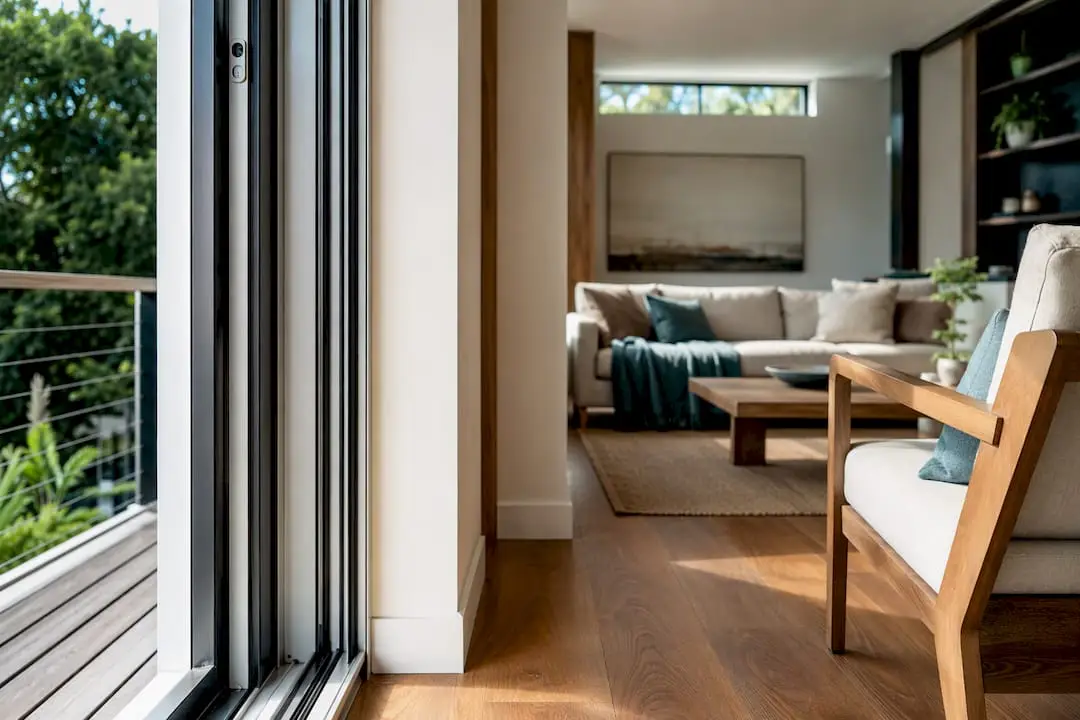
Double hung windows are the better call for bedrooms and upper floors, where tilt-in cleaning removes the ladder risk entirely, and for homes with a traditional or heritage façade where the divided-sash look matches the architecture. They’re also more compatible with window-mounted air conditioning units, which typically need a vertically opening sash to fit and seal properly.
Mixing styles across a single home is common and sensible: sliders on the ground floor living areas, double hung upstairs in bedrooms. Whatever you choose, check local egress requirements for bedrooms. Some jurisdictions set minimum clear opening dimensions for emergency escape, and not every slider or double hung configuration meets that on its own.
Installer checks and questions to ask before you sign off
The install matters as much as the window itself. Frame squareness, seal continuity, and correct drainage are the details that separate a window that performs for twenty years from one that’s leaking draughts within twelve months. Installation quality is consistently the biggest factor in long-term airtightness, more so than whether you picked a slider or a double hung.
Before sign-off, an installer should be able to walk you through:
- A measurement check confirming the frame sits square in the opening.
- A demonstration that drainage weep holes clear water properly.
- A visual seal inspection around the full frame perimeter.
- Confirmation of IGU spec, warranty terms, and expected lead time in writing.
Pro Tip: Ask what happens if a seal fails within the warranty period. A supplier with a clear, written service policy is telling you something about how they expect their product to hold up. Our installation walkthrough covers exactly what a proper measure-to-install process looks like on site.
A simple decision framework you can use now
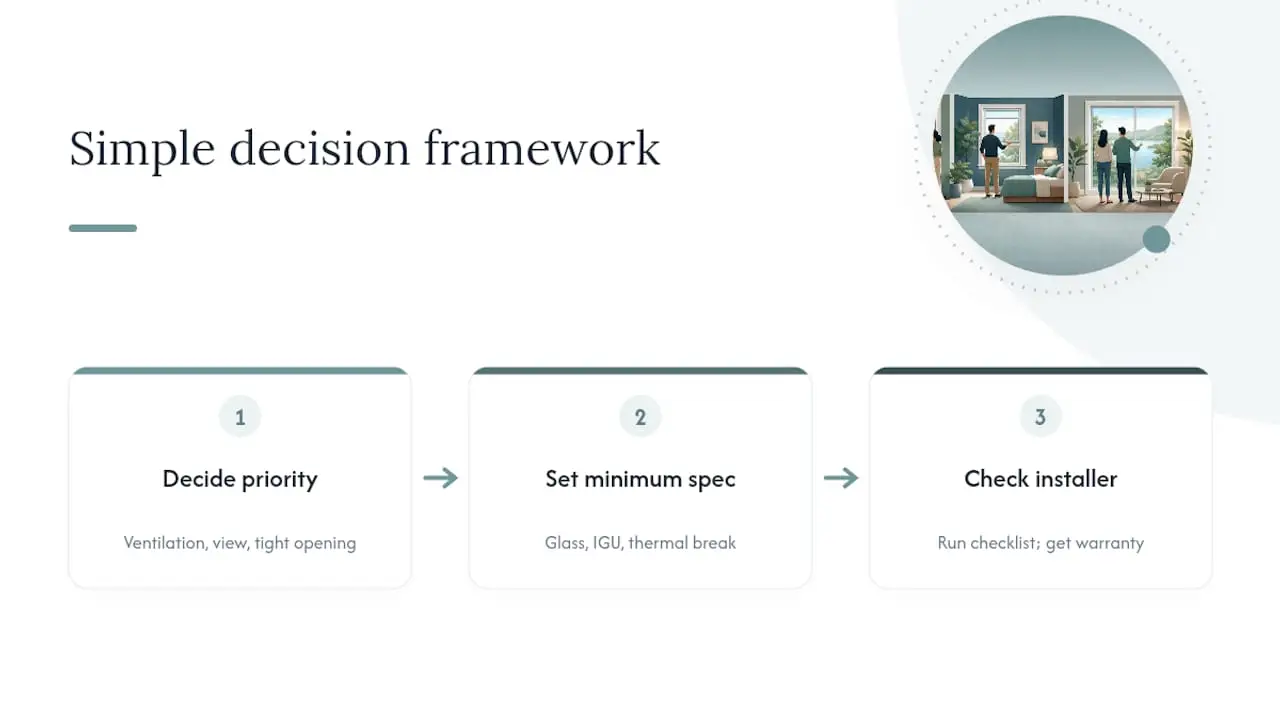
Start with the need, not the style. First, decide what matters most: ventilation control, an unobstructed view, or a tight opening that rules one option out. Second, set a minimum glass and frame spec, including IGU type and thermal break, before you compare prices. Third, run any quote against the installer checklist above and get warranty terms in writing before you commit.
Why choose Prime Aluminium Solution for your window upgrade
Windows should be built around the room’s needs, not just from a catalogue. A good measure-to-install process starts with an on-site assessment of the opening, orientation, and ventilation needs, then moves into custom aluminium framing built to the exact specification, whether sliding, double hung, or a mix across the house.
When you request a quote, ask for the same things this article covers: IGU specification, thermal break confirmation, warranty terms, and expected lead time. That’s standard practice on every aluminium window project we quote, and it’s the difference between a window that performs for two decades and one you’re troubleshooting within a year. If you’re weighing up sliders for a living area or double hung for upstairs bedrooms, get in touch for a free site measure and a written quote through Primealuminiumsolution.
Sources
- Glazing | YourHome (Australian Government)
- Sliding Windows vs Double Hung Windows: Which Should You Choose for Your Home?
- Double Hung vs Sliding Windows Which is Better: Home Guide
FAQ
Are double hung or sliding windows better?
Neither wins outright. Double hung suits rooms needing flexible ventilation and easy upper-floor cleaning, while sliding windows suit wide openings, tight vertical clearance, and lower routine upkeep.
What are the disadvantages of double hung windows?
They typically cost more due to balance hardware and tilt mechanisms, and that extra hardware can need periodic adjustment or service over the window’s lifespan.
What are the disadvantages of sliding windows?
Tracks collect dust and debris that can affect smooth operation if not cleaned regularly, and a single sliding sash doesn’t create the same convection airflow as a double hung’s dual openings.
Is a single hung window better than a slider?
Single hung windows, where only the bottom sash moves, offer ventilation control similar to double hung but at a lower price point than a full double hung unit, while sliders remain the better pick for wide, unobstructed views and tight vertical spaces.